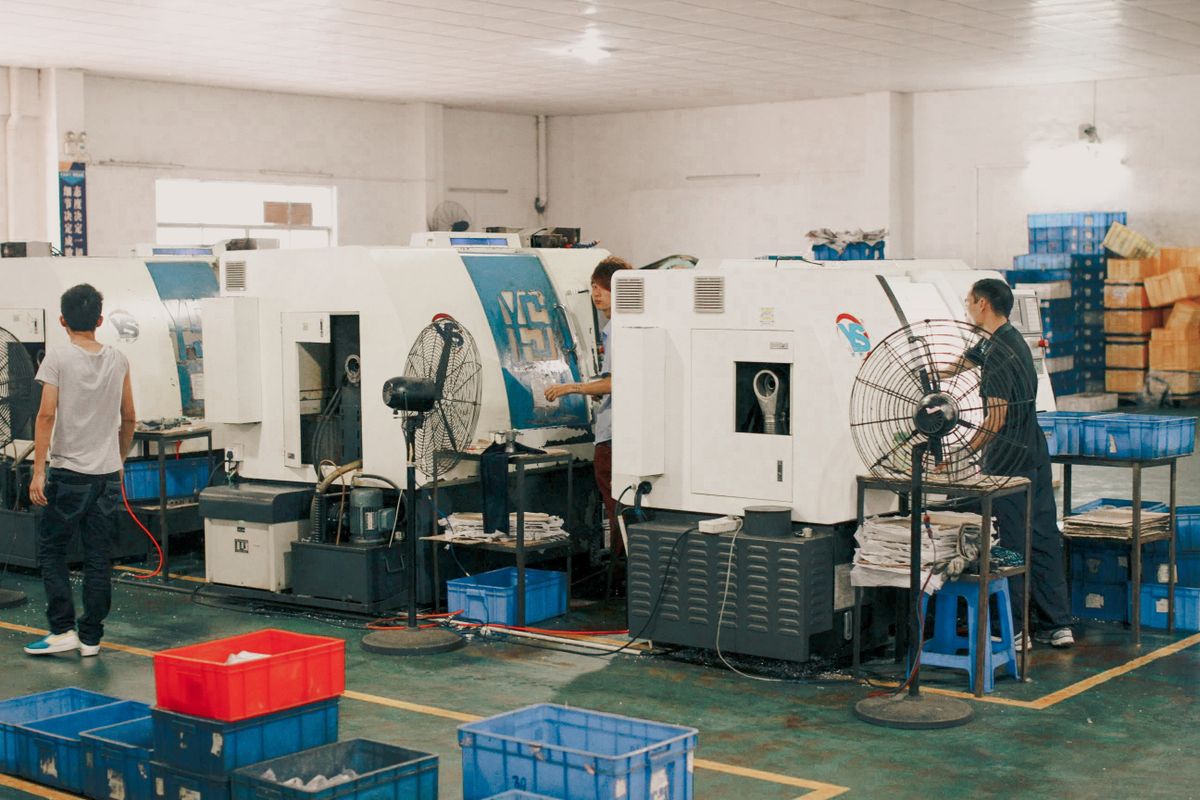
A CNC hourly rate can include depreciation, financing, maintenance, utilities, software, floor space, supervision, insurance, and other overhead. Labor can be kept separate when that makes the quote easier to audit.

The best rate is one that matches the purpose of the calculation. Use a simple internal rate for quick comparisons, but build a more complete cost model when pricing a customer job.
Separate machine cost from labor and margin
A useful starting point is machine hourly cost = annual machine-related cost / practical productive machine hours. The denominator should represent achievable billable or productive hours, not automatically 8,760 calendar hours. Planned maintenance, setup, holidays, machine availability and utilization all matter.
Example annual cost build-up
Assume annual machine ownership or financing expense of $24,000, maintenance and consumables of $9,000, utilities of $6,000, and allocated shop overhead of $21,000. That totals $60,000 annually. At 1,500 practical productive hours, the estimated machine cost is $40 per productive hour. If only 1,200 productive hours are achievable, it rises to $50 per hour without changing the annual expense.
Quotation example

For a two-hour job at a $40 machine rate, machine cost is $80. If direct labor is separately estimated at $30/hour for two hours, add $60. Then include material, tooling, outside processing, inspection, scrap allowance and any job-specific shipping or packaging. The cost estimate is not the selling price: margin and markup use different formulas. For a target 20% gross margin on $200 cost, selling price = 200 / (1 − 0.20) = $250, whereas 20% markup gives only $240.
Monthly rate review
- Reconcile budgeted machine hours with measured available and productive hours.
- Keep shop-wide overhead allocation consistent across comparable machines.
- Avoid counting wages twice when they are included both in overhead and labor.
- Review rate changes after major utilization, energy or maintenance changes.
Use the CNC cost calculator to estimate a job, then compare it with actual shop costs. A quoted hourly rate is a business assumption, not a universal industry benchmark.
Frequently Asked Questions
Which expenses belong in a CNC machine hourly rate?
Common inputs include depreciation or financing, maintenance, utilities, space, insurance, software and attributable overhead. Direct labor may be separated to avoid double-counting.
Should idle machine hours be included in the denominator?
Using realistic productive hours rather than theoretical calendar hours usually gives a more useful recovery rate. Document the utilization assumption.
Is an hourly rate the same as a customer quotation?
No. A quotation also needs material, setup, tooling, inspection, outside services, delivery risk and margin assumptions.