
Cycle time tells you how long a part takes under the cutting condition, but a production job usually takes more time. Setup, loading, inspection, tool changes, and downtime can materially change the schedule.
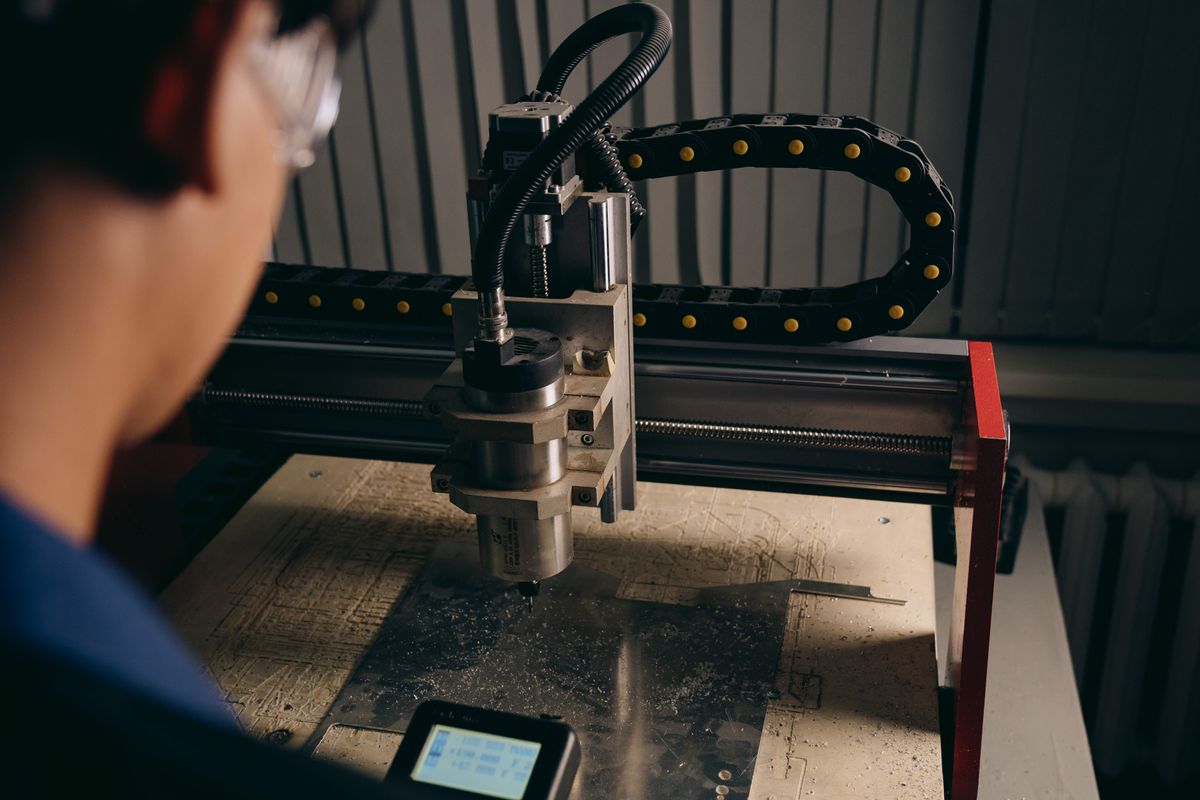
A useful first estimate separates setup minutes from per-part time and then applies a clear downtime allowance. Measure actual production whenever possible and use the estimate as a planning input rather than a promise.
Build production time from its components
A basic estimate is total job time = setup time + (quantity × cycle time) + inspection, handling and planned noncutting time. Keep one-time activities separate from repeating per-part activities. For example, a first-article inspection belongs in the setup or launch allowance, while routine in-process inspection may occur every few parts.
Worked example: a 100-piece order
Consider 45 minutes of setup and a measured 4.5-minute cycle for 100 good parts. Base time is 45 + (100 × 4.5) = 495 minutes, or 8.25 hours. If the operation needs a 15% allowance calculated as a share of available time, divide by 0.85: approximately 9.71 hours. If instead the allowance means adding 15% to the base time, multiply by 1.15: 9.49 hours. State which approach you use, because they are not equivalent.
Scrap changes the required quantity

At an assumed 3% scrap rate, 100 good parts require an expected 100/0.97 = 103.1 starts. For whole-part planning, round up to 104 starts, then apply the measured production cycle. Scrap rate is an expectation, not a guarantee of the actual number rejected.
Improve the estimate with actual shop data
- Time setup separately from program run and load/unload.
- Measure tool changes, inspection frequency and planned maintenance.
- Account for overlapping operations only when they truly occur simultaneously.
- Compare quoted hours with actual completed jobs and record consistent reasons for variance.
For cost planning, the CNC cost calculator can combine machine and labor rates with the estimated time. Recheck toolpath cycle times against real machine execution before setting delivery commitments.
Frequently Asked Questions
What is the difference between cycle time and total job time?
Cycle time covers a repeat operation or part, while total job time also includes setup, first-article approval, handling, inspection, tool changes and interruptions.
How should setup time be assigned to a production order?
Treat setup as a batch-level activity and distribute its cost per part using the planned or actual accepted quantity, while retaining the separate total setup time.
How does scrap affect estimated production time?
More starts may be required to deliver the accepted quantity, increasing machine hours, materials and inspection effort.